

The Client Keeps Coming Back. But Is Therapy Moving Forward?
Have you ever finished a therapy session and wondered:
"Are we moving forward, or are we talking about the same things again?"
It's a question many therapists quietly carry with them.
Your client attends regularly. They engage in the conversation. They keep showing up.
Yet the same struggles keep appearing, and progress feels slower than expected.
And sometimes, what feels most difficult is not knowing why.
What Clients Don't Always Say
Most clients won't tell you when they feel stuck.
Instead, they keep showing up, hoping something will change.
At the same time, they may be wondering:
"Why does this still affect me?"
"I've talked about this so many times. Why does it feel the same?"
"Why does it feel like I'm going in circles?"
These thoughts often remain unspoken not because clients don't trust their therapist, but because they don't know how to bring them into the conversation.
Sometimes, the people who feel most stuck are the ones trying hardest to move forward.
When Therapy Feels Stuck
When progress slows, our first instinct is often to look for a new technique or intervention.
Sometimes, what is needed is something simpler: a moment of reflection.
Ask yourself:
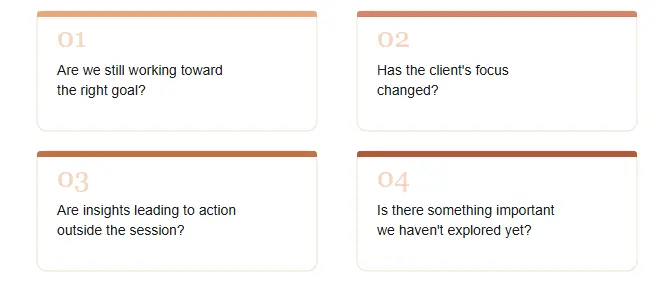
Sometimes therapy feels stuck not because nobody is working hard, but because both therapist and client have become comfortable talking around the very thing that needs attention.
Sometimes the answer is not a new technique.
Sometimes it is a new conversation.
The Question That Changes Everything

One simple question can open new doors:
"How has therapy been feeling for you lately?"
It invites clients to talk about the process itself, not just the problems they bring into the room.
Sometimes clients have been waiting for that question.
Not because they have lost faith in therapy.
But because they haven't known how to ask for something different.
That conversation can reveal concerns, expectations, fears, or goals that have remained hidden for a long time.
An Invitation to Pause
A stuck session is not necessarily a sign that therapy is failing.
Often, it is an invitation to slow down, become curious, and look beneath the surface.
Meaningful change doesn't always begin with a breakthrough.
Sometimes it begins with a question that neither therapist nor client knew needed to be asked.
And sometimes, the moment therapy starts moving again is the moment both people stop searching for answers and become curious about what has been missing from the conversation.

This article is for informational purposes only and does not constitute medical advice, diagnosis, or treatment. Always consult with a qualified healthcare provider for personal medical concerns.
Have questions about this topic? Our team is happy to help. Get in touch →