
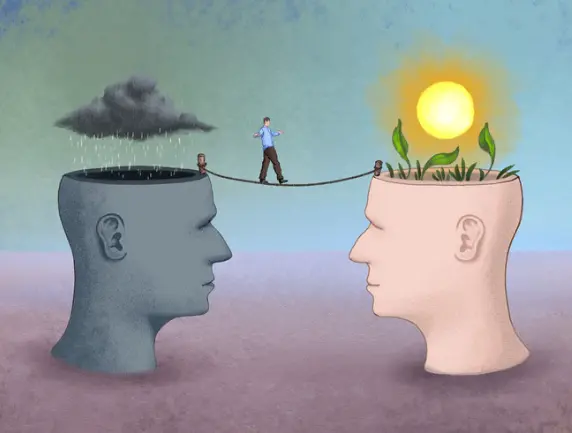
CBT and the Evolving Landscape of Psychology in Kerala
From theory to therapy room — how Cognitive Behavioral Therapy is shaping modern psychological practice across the state.
Psychology Practice · 8 min read · Evidence-Based Therapy The Gap
Theory in classrooms, silence in the therapy room
Psychology graduates in Kerala leave college armed with diagnoses, models, and frameworks — but the journey from textbook knowledge to a real client sitting across from you is rarely straightforward. The first session has a way of surfacing every uncertainty that academic preparation quietly leaves unaddressed.
This is not a failure of education. It is the nature of any applied science. What bridges that distance, for many practitioners, is a structured, skills-based approach — one that is learnable, replicable, and grounded in evidence.
The best framework for a new psychologist is one that tells them not just what to understand, but what to do next.
On bridging theory and practice
The Approach
What makes CBT different
Cognitive Behavioral Therapy, developed by Aaron Beck in the 1960s, works from a deceptively simple premise: our thoughts shape our emotions, and our emotions shape our behavior. By identifying and challenging unhelpful thought patterns, individuals can change how they feel and act.
What has made CBT one of the most widely adopted therapeutic approaches in the world is not just its effectiveness — it is its clarity. Sessions have structure. Progress is measurable. Techniques can be taught, practiced, and refined.
In Kerala, CBT is routinely used to address anxiety, depression, stress-related presentations, and behavioural concerns — across clinics, hospitals, schools, and corporate wellness programmes.
Why It Works
Four reasons CBT has found its footing
StructureTime-bound, session-by-session framework with clear goals EvidenceBacked by decades of rigorous clinical research worldwide Skill-buildingClients leave sessions with tools they can use independently VersatilityApplicable from children to adults, across diverse presentations
For a newly qualified psychologist, this framework provides something invaluable: a way to walk into a session with confidence, knowing that even if uncertainty arises, there is a method to return to.
Context Matters
Adapting CBT to the Kerala context
No therapy is culture-neutral. In Kerala, a person's distress is rarely experienced or expressed in isolation — it unfolds within family systems, social expectations, and deeply held cultural beliefs. The fear of stigma, the weight of collective identity, the hesitation to speak about mental health — these are not obstacles to therapy. They are the context within which therapy must happen.
Effective CBT practice here means speaking in familiar language, acknowledging the role of family and community in a person's life, and adapting standard techniques without losing their core logic. Cultural sensitivity is not an add-on. It is the work.
Family systems Social expectations Cultural beliefs Stigma awareness Language sensitivity
The Field Today
Where psychologists in Kerala are working
The demand for psychologists across Kerala has grown steadily — driven by rising mental health awareness, shifting lifestyles, and the increasing visibility of stress in academic and professional environments.
Hospitals and mental health clinics · Schools and educational institutions · Corporate wellness programmes · NGOs and rehabilitation centres · Private practice and online therapy
The field is becoming more dynamic, with evidence-based approaches like CBT moving from optional knowledge to professional expectation.
Honest Challenges
What the field still needs to address
Limited practical training during academic programmes leaves many graduates underprepared for real client work
The transition from theory to practice remains one of the most significant career hurdles for new psychologists
Social stigma — around both seeking therapy and choosing it as a career — continues to shape the field's perception
Therapeutic approaches need genuine local adaptation, not just translation from Western frameworks
Looking Ahead
The direction of travel
Greater awareness and acceptance of mental health care across communities
Integration of online therapy and digital mental health platforms
Stronger emphasis on skill-based, practical training in academic programmes
Culturally adapted practices that reflect the lived realities of Kerala
CBT, with its adaptability and measurable outcomes, is well-positioned to remain at the centre of this shift.
Conclusion
Cognitive Behavioral Therapy has become more than a treatment modality in Kerala — it has become a shared language for a profession finding its feet. The work ahead is not just about applying better techniques. It is about building a mental health culture that is accessible, effective, and genuinely rooted in the communities it serves.